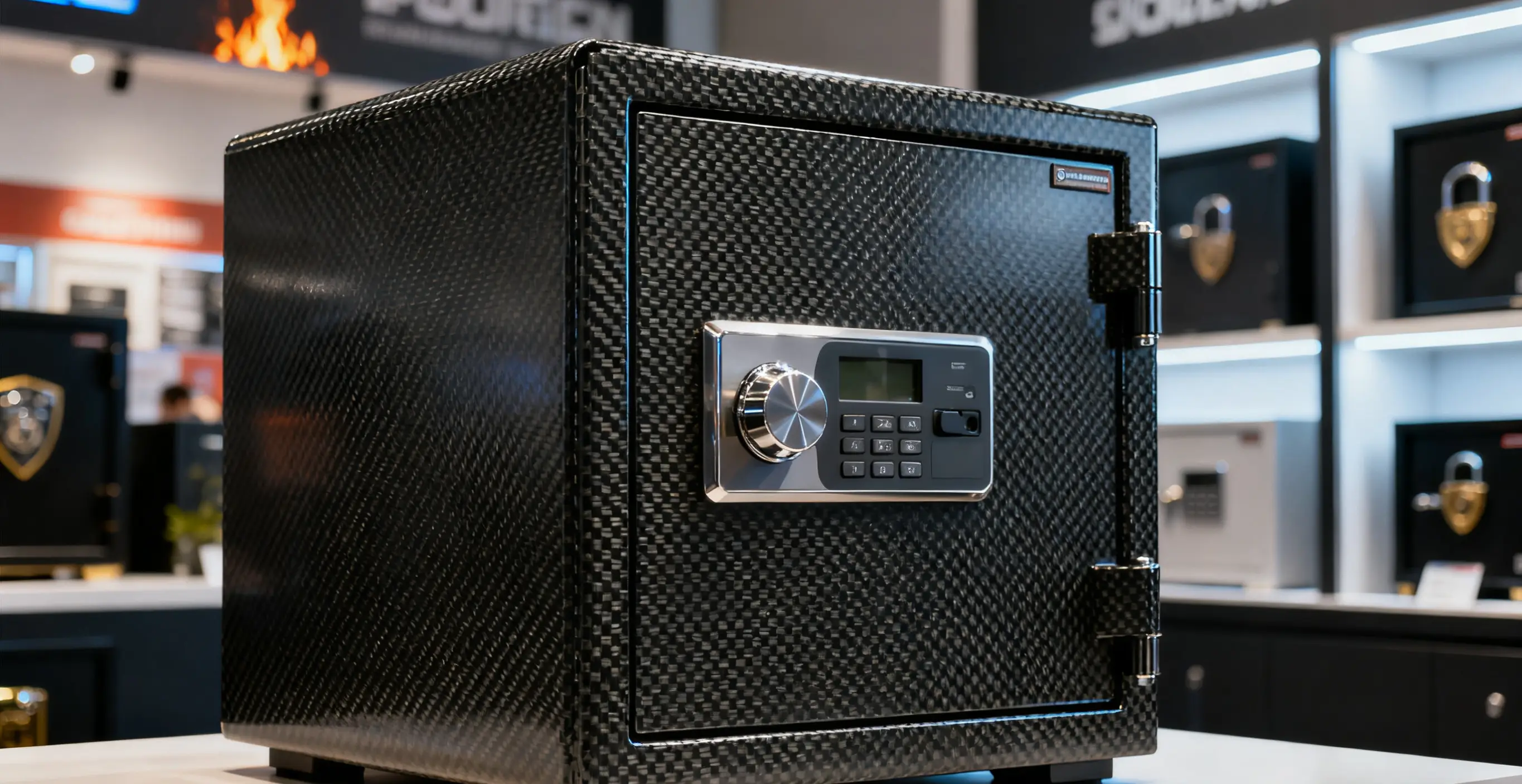
In the field of high-security safes, traditional steel has long been the dominant material. However, as carbon fiber technology advances and costs decrease, more manufacturers are adopting it in their designs. Its exceptional strength-to-weight ratio, corrosion resistance, and elegant appearance make it ideal for modern safes that balance protection and efficiency.
0.6mm – 1mm: For small or electronic safes, improves anti-pry and impact resistance.
1mm – 3mm: Suitable for medium safes, balancing high protection and manageable weight.
Above 3mm: Used for large or premium safes requiring fire, drill, and pry resistance.
Thickness should balance safety, transport, and installation considerations.
Multi-layer composite design: Combine carbon fiber with steel or fireproof layers for improved performance.
Custom sizing: Cut panels to fit safe interiors precisely.
Surface finishing: Apply epoxy or scratch-resistant coatings to enhance durability.
Proper bonding ensures the stability and durability of carbon fiber panels. Common adhesives include:
Epoxy resin: High strength and heat resistance, ideal for main structural areas.
Polyurethane adhesive: Flexible and vibration-resistant, suitable for outer shells.
Acrylic adhesive: Fast-curing and impact-resistant.
Silicone adhesive: Waterproof and temperature-tolerant.
Hot melt adhesive: Quick setting, ideal for small components.
Ensure surfaces are clean and apply pressure or heat during curing to improve adhesion.
Carbon fiber enables safes that are lighter, stronger, and more resistant to damage. As fireproof and smart technologies evolve, carbon fiber will become a core material for next-generation premium safes.
GBTECH — your trusted partner in advanced carbon fiber protection systems.
Tags: #CarbonFiberSafe, #CompositeSecurity, #LightweightSafe, #GBTECH, #SecurityEngineering, #CarbonFiberTechnology


 WhatsApp