The composite materials industry is currently undergoing a critical technological shift. The consistency of high-end component quality is no longer determined solely by whether equipment functions properly. Instead, it depends on the full-process controllability of material states, tension windows, temperature thresholds, path algorithms, and quality data. Dry prepreg filament winding is at the heart of this transformation.
From relying on hardware in the past, to emphasizing system integration today, and ultimately focusing on predictable performance in the future—the goal of high-end component manufacturing is to ensure long-term stability and reliability in service.
Dry prepreg filaments are continuous fiber bundles that have been precisely pre-impregnated in prior processing steps. Resin content, fiber bundle morphology, surface tackiness, and degree of pre-curing are all precisely controllable. This process fundamentally changes the traditional wet winding approach of “on-site resin impregnation,” moving the most fluctuation-prone steps to the material manufacturing stage.
In essence, the transition from wet to dry winding transforms “experience-dependent, uncontrollable on-site operations” into a “designable, testable, fully traceable” standardized material system.
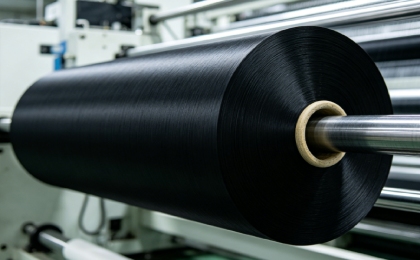
The core requirement for dry prepreg filament winding equipment is precise control, not just the ability to wind: stable unwinding, flexible guidance, closed-loop tension control, and traceable fiber placement.
Advanced equipment must be able to “read” the material state, precisely control fiber paths, record key process data, and provide early warnings before anomalies occur. In the future, filament winding machines will function as integrated, intelligent manufacturing operating systems rather than mere mechanical devices.
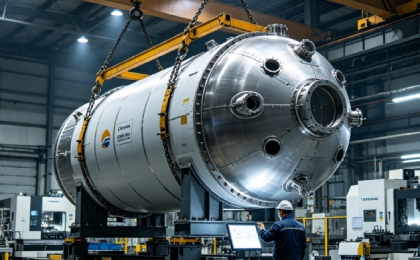
The advantages of the dry method are amplified in large-scale production. It reduces open resin operations, mitigates environmental pollution and health risks, and integrates production rhythm, clean environment, and quality consistency into a single control system. The ultimate competitiveness of high-end composite manufacturing lies in “stable replication,” and dry prepreg filament winding is key to achieving this.
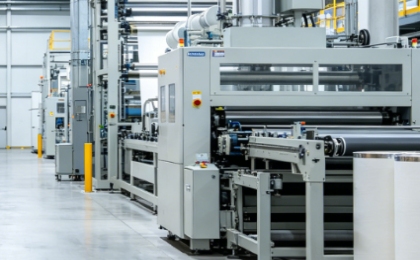
Wet winding remains cost-effective and mature, making it suitable for general industrial products. However, in high-end applications such as hydrogen storage cylinders and aerospace pressure vessels, parameter fluctuations during on-site resin impregnation can be amplified. The value of dry prepreg lies in upgrading “on-site impregnation” to “pre-calibrated material,” achieving standardized production rather than on-site adjustments.
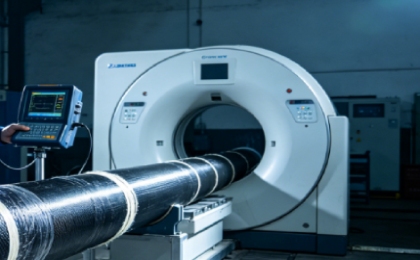
The dry prepreg filament winding process can be divided into seven critical stages:
Fiber spool supply
Tension control
Fiber guiding/feeding
Mandrel winding
Heating/compaction
Curing and forming
Component verification
Each stage carries potential quality risks. The real technical challenge lies in full-parameter controllability rather than mere winding operations.
The technology can be summarized with five “controls”: control of tension, angle, feed, compaction, and voids. These factors are interdependent and collectively determine the final performance of the component. Advanced processes emphasize joint control rather than single-parameter optimization, establishing a process window for tension—temperature—speed—compaction—pathway, which is crucial for ensuring high performance.
The performance of high-end components is not a result of final inspections; it is actively created through precise control at every stage of winding. Defects often accumulate due to interactions among material state, temperature windows, and tension fluctuations. Quality systems should implement full-process control logic and retain process data at every step for traceability.
Globally, companies such as Teijin Carbon, Toray Carbon Fibers Europe, TCR Composites, and Kümpers Composites have developed dry prepreg products. In China, GB TECH has become a significant supplier with a stable carbon fiber product portfolio, supporting domestic implementation of dry prepreg filament winding.
Dry prepreg filament winding is particularly valuable for hydrogen storage cylinders, aerospace shells, and high-end industrial pressure components. Its greatest value is not improving appearance, but enabling stable replication of high-performance components.
Pre-standardization of materials
Closed-loop intelligent equipment
Engineering of path algorithms
Systematic quality traceability
For domestic enterprises, integrating materials, equipment, software, and quality validation throughout the full process can establish a competitive advantage in hydrogen energy, commercial aerospace, low-altitude economy, and high-end equipment sectors.
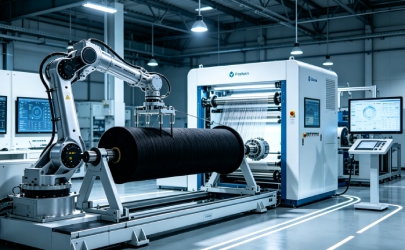
Traditional fiber winding addresses the basic question of “how to form fibers.” Advanced dry prepreg filament winding addresses high-end challenges: “how to form stably, operate reliably, and replicate in volume.” Truly advanced fiber winding technology does not merely wrap fibers around a mandrel—it integrates performance, quality, and long-term reliability into each component’s structure with precision. This is the core value of dry prepreg filament winding.
Official GBTECH Websites:
EMail: zane@gbtechgroup.cn
Phone: +1 (510)902-9987
www.gbtechgroup.cn | www.gbtechcomposites.com | www.gbtechmaterials.com
US.Office: 38758 Buckboard Common, Fremont, CA 94536, United States
China Head Quaters: Building 1, Left Side, Tangye Road, Xinxu, Huiyang, Huizhou, China


 WhatsApp
 E-mail